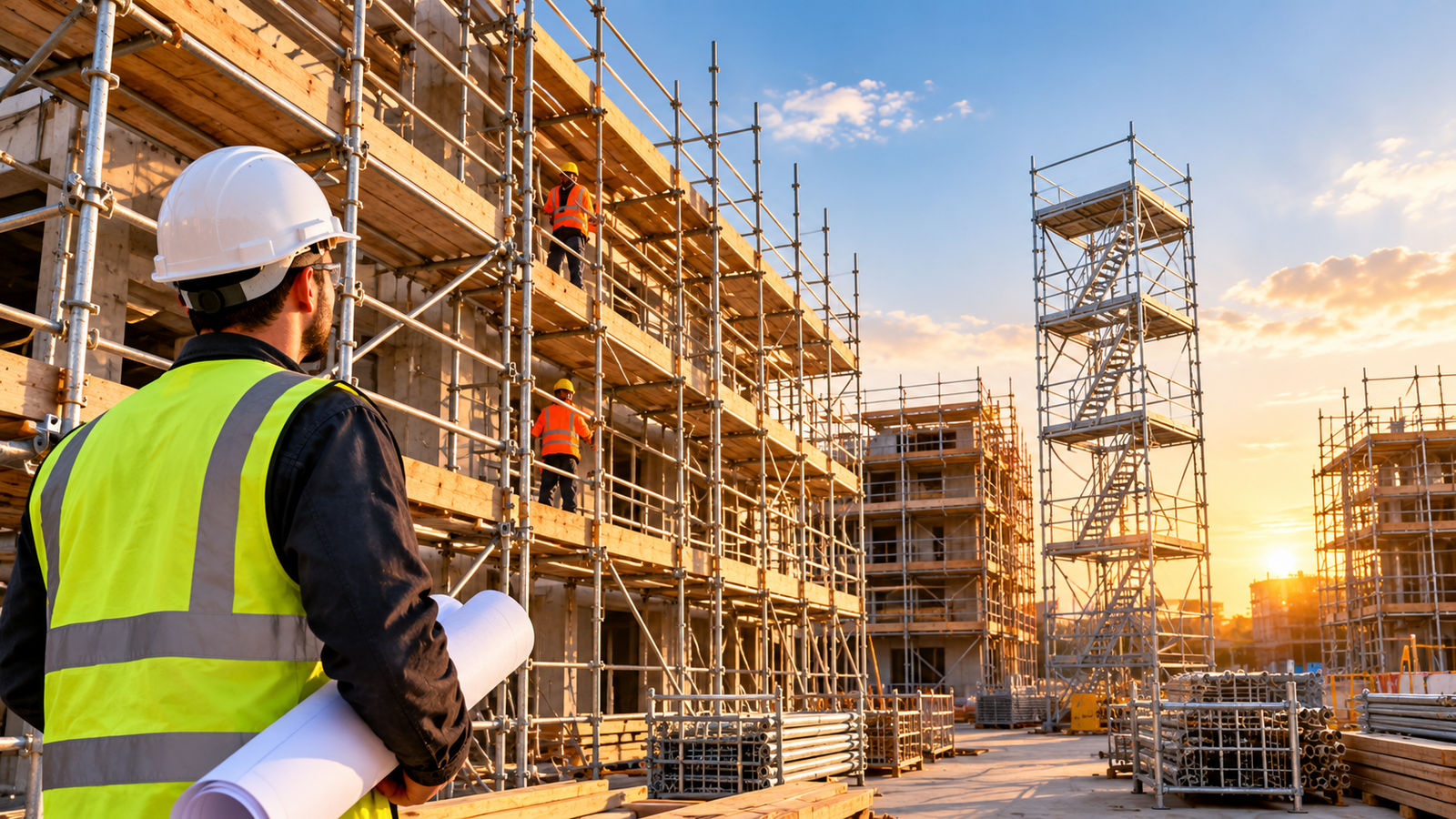
Scaffolding plays an important role in construction by providing temporary working platforms and access to elevated areas. From residential renovations to large commercial developments, the right scaffolding system helps tradespeople access difficult areas and carry out construction, maintenance, and repair work efficiently.
However, not all scaffolding systems are the same. Different types of scaffolding are designed for specific applications, building structures, site conditions, and working requirements.
At G.O.A.T Scaffolding Services, understanding the different types of scaffolding is an important step towards selecting a suitable access solution for your project. In this guide, we explore the most common scaffolding systems used in construction, their benefits, applications, and the factors to consider when choosing the right option.
What Is Scaffolding in Construction?
Scaffolding is a temporary structure erected around or alongside a building to provide access and working platforms for construction workers. It is commonly manufactured using steel or aluminium components and designed to support specified loads during construction or maintenance activities.
Scaffolding is used for bricklaying, plastering, painting, roofing, facade restoration, commercial construction, and building repairs.
A properly selected and installed scaffolding system provides suitable working platforms and access arrangements while helping construction teams organise their work at height.
10 Different Types of Scaffolding Used in Construction
Several scaffolding systems are available for residential, commercial, and industrial projects. Each type has its own structural design, advantages, and limitations.
1. Single Scaffolding
<escape>Single scaffolding, also known as bricklayer’s scaffolding, is traditionally used for brick masonry work.</escape>
It generally consists of vertical standards, horizontal ledgers, and putlogs arranged alongside a building wall. Its configuration is designed to provide access for bricklayers during wall construction.
Common applications:
- Bricklaying and masonry work
- Residential construction
- Building extensions
- Certain wall repair projects
Single scaffolding is most appropriate when its traditional configuration suits the wall structure and project requirements.
2. Double Scaffolding
Double scaffolding is traditionally associated with stone masonry, particularly where fixing putlogs into the wall is difficult or unsuitable.
It uses two rows of standards to form a supporting structure alongside the building. The arrangement provides an alternative to relying on wall connections for platform support.
Common applications:
- Stone masonry
- Exterior stonework
- Building restoration
- Selected masonry construction projects
The scaffold must be designed according to the building conditions, anticipated loads, and applicable safety requirements.
3. Cantilever Scaffolding
Cantilever scaffolding is supported by engineered arrangements that project from a building or another supporting structure. It can be useful when conventional scaffold standards cannot be positioned directly on the ground below the working area.
Common applications:
- Buildings with restricted ground access
- Work above entrances or obstructions
- Certain renovation projects
- Sites where ground-level space is limited
Cantilever scaffolding requires careful structural assessment because the supporting arrangements must safely carry the intended loads.
4. Suspended Scaffolding
Suspended scaffolding consists of a platform suspended from an overhead structure using suitable suspension equipment. Depending on the system, the platform may be raised or lowered to reach different working levels.
It is commonly used for maintenance and repair work on tall buildings.
Common applications:
- High-rise exterior painting
- Window cleaning
- Facade maintenance
- Exterior inspection and repair
Appropriate suspension equipment, fall protection, inspections, and operating procedures are essential for safe use.
5. Trestle Scaffolding
Trestle scaffolding uses platforms supported by trestles or movable supports. It is generally suitable for low-level work, particularly inside buildings.
Its suitability depends on the equipment design, permitted working height, and site conditions.
Common applications:
- Indoor painting
- Plastering
- Ceiling work
- Interior maintenance
Trestle scaffolding is not intended for every working-at-height task. Always follow the manufacturer’s instructions and applicable safety requirements.
6. Steel Scaffolding
Steel scaffolding uses steel tubes and compatible fittings or components to create a temporary access structure. It is widely used on construction sites because steel components can provide strength and durability when properly selected and maintained.
Common applications:
- Commercial building construction
- Large residential projects
- Industrial maintenance
- Exterior renovation
- Heavy-duty access requirements
The suitability of steel scaffolding depends on the scaffold design, component condition, supporting surface, and required load capacity.
7. System Scaffolding
System scaffolding uses prefabricated components designed to connect in specific configurations. Common examples include ringlock and cuplock systems.
Compared with traditional tube-and-fitting arrangements, system scaffolding uses purpose-designed connection points and standardised components.
Common applications:
- Commercial construction
- Multi-storey buildings
- Industrial projects
- Complex building layouts
- Projects requiring adaptable scaffold configurations
System scaffolding can help simplify assembly and accommodate different site layouts when correctly designed and installed.
8. Mobile Scaffolding
Mobile scaffolding is a freestanding structure fitted with castor wheels, allowing it to be repositioned when required.
It is useful for work that involves moving between nearby areas, provided the scaffold remains within its design limits and operating instructions.
Common applications:
- Indoor installation work
- Painting and decorating
- Maintenance tasks
- Electrical installation
- Suitable warehouse and commercial work
Wheels must be secured during use. An occupied scaffold must not be moved unless the specific equipment and applicable procedures expressly permit it.
9. Aluminium Scaffolding
Aluminium scaffolding uses lightweight aluminium components. It can be useful where ease of handling and portability are important considerations.
Common applications:
- Residential maintenance
- Interior renovation
- Lightweight access requirements
- Suitable commercial maintenance projects
Although aluminium is lighter than steel, the system must still be correctly assembled and used within its specified capacity. Aluminium scaffolding is not automatically suitable for every heavy-duty application.
10. Patented Scaffolding
Patented scaffolding generally refers to prefabricated systems that use specially designed frames, brackets, or adjustable components to create a working platform.
The exact configuration depends on the manufacturer and the particular scaffold system.
Common applications:
- Certain building maintenance tasks
- Small construction projects
- Selected renovation activities
- Work requiring purpose-designed access equipment
Always verify the equipment’s intended use, working limits, and compatibility before selecting a system.
How to Choose the Right Type of Scaffolding
Selecting the right scaffolding system depends on several factors. The most suitable option should provide appropriate access while meeting the project’s structural and safety requirements.
1. Project Type
Consider whether the scaffolding is needed for residential construction, commercial development, masonry, painting, roofing, or facade restoration.
2. Building Height and Design
The building’s height, shape, external features, and access limitations influence the scaffold configuration.
3. Site Conditions
Ground stability, nearby structures, overhead hazards, pedestrian routes, and available working space must be assessed before installation.
4. Load Requirements
The scaffold must be designed to accommodate the expected workers, tools, materials, and equipment without exceeding its rated capacity.
5. Project Duration
The length of the project may influence whether a fixed scaffold, mobile scaffold, suspended platform, or another suitable access system is appropriate.
6. Safety and Compliance
The selected scaffold should meet applicable requirements for design, installation, access, fall protection, inspection, and use.
G.O.A.T Scaffolding Services can help you assess your project’s access requirements and explore a suitable scaffolding solution.
Benefits of Using Professional Scaffolding Services
Working with a professional scaffolding provider can help ensure that the access system is suitable for the task and the conditions on site.
Key benefits include:
- Appropriate scaffold selection: Choose a system based on the project’s specific needs.
- Better site access: Provide suitable working platforms for elevated tasks.
- Project coordination: Plan scaffold installation around other construction activities.
- Safety-focused installation: Ensure the system is assembled and used in accordance with its design and applicable requirements.
- Efficient use of resources: Plan access, equipment, and working areas more effectively.
For residential renovations, commercial construction, or building maintenance, G.O.A.T Scaffolding Services can discuss the requirements of your project and help identify an appropriate approach.
Scaffolding Safety Tips for Construction Projects
Scaffolding safety should be considered from the planning stage through to dismantling.
Follow these essential practices:
- Have scaffolding erected, altered, and dismantled by appropriately trained and competent personnel.
- Ensure the ground or supporting structure can carry the anticipated loads.
- Provide suitable platforms, guardrails, and safe access arrangements where required.
- Never exceed the scaffold’s specified load capacity.
- Inspect scaffolding according to applicable requirements and after events that may affect its stability.
- Follow manufacturer instructions for assembly, use, and movement.
- Assess weather conditions before and during work at height.
- Keep working platforms clear of unnecessary materials and trip hazards.
In Australia, scaffolding work is subject to applicable workplace health and safety legislation and relevant guidance. Requirements can vary by jurisdiction and the nature of the work, so project teams should confirm the rules that apply to their site.
What Affects the Cost of Scaffolding?
Scaffolding costs vary depending on the type of system and the complexity of the project.
Factors that may influence the final quotation include:
- Scaffold height and dimensions
- Building shape and access restrictions
- Installation and dismantling labour
- Hire period
- Transport and delivery requirements
- Specialised platforms or access equipment
- Additional safety and protection measures
For a more accurate estimate, discuss the scope of work, site access, expected duration, and project requirements with G.O.A.T Scaffolding Services.
Why Choose G.O.A.T Scaffolding Services?
Choosing the right scaffolding provider is an important part of preparing for construction, renovation, and maintenance work.
G.O.A.T Scaffolding Services can be your starting point for discussing project access requirements and identifying a suitable scaffolding approach.
When planning your project, consider the importance of:
- Selecting a scaffold appropriate for the work.
- Assessing building design and site conditions.
- Coordinating access with other trades.
- Following relevant safety and compliance requirements.
- Establishing a clear installation and dismantling schedule.
Whether your project involves a residential property, commercial building, or exterior restoration, contact G.O.A.T Scaffolding Services to discuss your requirements and request a tailored quotation.
Frequently Asked Questions About Scaffolding Types
What are the main types of scaffolding used in construction?
Common types include single scaffolding, double scaffolding, cantilever scaffolding, suspended scaffolding, trestle scaffolding, steel scaffolding, system scaffolding, mobile scaffolding, aluminium scaffolding, and patented scaffolding.
Which type of scaffolding is best for construction?
The best type depends on the building design, working height, ground conditions, required loads, access restrictions, and work being performed. A competent scaffolding professional can assess the site and recommend an appropriate system.
What is the difference between steel and aluminium scaffolding?
Steel scaffolding is commonly selected for strength and durability, while aluminium scaffolding offers lower component weight and easier handling. The correct choice depends on the application, equipment specifications, and load requirements.
What is system scaffolding?
System scaffolding uses prefabricated components with purpose-designed connections. Ringlock and cuplock are common examples used across construction and industrial projects.
Is mobile scaffolding suitable for outdoor construction?
Mobile scaffolding can be suitable for certain outdoor tasks when the ground is firm and level and the equipment is used within its design limits. Weather, stability, and site conditions must also be considered.
How do I get a scaffolding quotation?
Contact G.O.A.T Scaffolding Services with details about your project, including the building type, approximate height, work required, location, and expected duration. These details help establish the project’s access requirements and quotation scope.
Conclusion
Understanding the different types of scaffolding used in construction helps you choose a suitable access solution for your building project. From traditional masonry scaffolding to mobile, suspended, and modular system scaffolding, each option serves a different purpose.
The right system depends on the building structure, working conditions, load requirements, and nature of the work. Proper planning, competent installation, and adherence to applicable safety requirements are essential for successful scaffolding operations.
G.O.A.T Scaffolding Services can help you explore suitable scaffolding options for construction, renovation, and maintenance projects.
Planning your next construction project? Contact G.O.A.T Scaffolding Services today to discuss your scaffolding requirements and request a quotation.
Leave a Reply